
If you’ve ever wanted to bake fresh, crusty bread at home without the fuss of kneading or complicated steps, this Dutch Oven No Knead Bread Recipe is exactly what you need. Imagine pulling a warm, golden loaf from your oven with a crunchy crust and soft, fluffy inside—all made with just a few simple ingredients and minimal effort.
Whether you’re new to baking or looking for a quick, reliable way to make bread, this recipe will change how you think about homemade bread. Ready to impress yourself and anyone you share it with? Keep reading, and you’ll discover how easy and rewarding baking your own bread can be.

Credit: www.talesfromthekitchenshed.com
Ingredients Needed
This Dutch oven no knead bread recipe uses simple ingredients. You only need a few items to make fresh bread at home.
Each ingredient plays an important role in creating soft, crusty bread. Let’s look at what you need.
Basic Flour And Yeast
Flour and yeast are the foundation of your bread dough. Choose the right type of flour for best results.
- All-purpose flour works well for this recipe
- Bread flour can give a chewier texture
- Active dry yeast or instant yeast both work
Water And Salt
Water hydrates the flour and activates the yeast. Use lukewarm water for best yeast activity.
Salt adds flavor and controls yeast growth. Do not skip the salt in your recipe.
- Use clean, lukewarm water (about 100°F or 38°C)
- Fine sea salt or table salt works well
Optional Add-ins
You can add extra ingredients to change the flavor or texture of your bread. These add-ins are optional.
- Herbs like rosemary or thyme for aroma
- Garlic powder or minced garlic for taste
- Seeds such as sesame, poppy, or sunflower
- Olive oil for softer crumb and richer flavor
Preparing The Dough
Making no knead bread in a Dutch oven is simple and fun. Preparing the dough carefully helps the bread turn out soft and tasty.
This part covers mixing the ingredients, letting the dough rest, and shaping it before baking.
Mixing Ingredients
Start by combining flour, salt, and yeast in a large bowl. Stir these dry ingredients well so they mix evenly.
Add water to the dry mix. Use a spoon or your hand to stir until a sticky dough forms. You do not need to knead it.
- Use 3 cups of flour
- Add 1 teaspoon of salt
- Mix in 1/4 teaspoon of yeast
- Pour about 1 1/2 cups of warm water
Resting Period
Cover the bowl with plastic wrap or a clean towel. Let the dough rest at room temperature for 12 to 18 hours.
This long rest lets the yeast work slowly. It helps the dough rise and develop flavor without kneading.
- Keep the dough in a warm place
- Do not disturb the dough during resting
- Look for bubbles and a doubled size
Shaping The Dough
After resting, turn the dough onto a floured surface. Fold it gently to form a rough ball shape.
Let the shaped dough rest for another 30 minutes. This helps it relax and get ready for baking.
- Sprinkle flour to prevent sticking
- Use a bench scraper to fold the dough
- Cover the dough with a towel during resting
Using The Dutch Oven
The Dutch oven helps bake no knead bread with a crispy crust. It traps steam and heat inside.
Using it correctly makes your bread soft inside and crunchy outside. It is simple to use.
Preheating Tips
Preheat your Dutch oven before adding the dough. Heat helps form a good crust.
Place the Dutch oven with the lid in the oven at 450°F (230°C) for 30 minutes. Use oven mitts to avoid burns.
Transferring Dough
Carefully move your dough to the hot Dutch oven. Use parchment paper to lift the dough easily.
Do not stretch the dough when placing it inside. Keep the shape loose and round for best results.
Covering And Baking
Cover the Dutch oven with its lid to trap steam. Steam creates a soft, chewy crust on the bread.
Bake covered for 30 minutes, then remove the lid. Bake for another 15 minutes to brown the crust.
Achieving The Perfect Crust
A Dutch oven helps make bread with a crisp, golden crust. The heavy pot traps heat and moisture inside.
This method creates steam, which is key to a crunchy crust. Follow these tips to bake bread just right.
Steam Creation
Steam keeps the dough surface moist during the first baking minutes. This stops the crust from hardening too soon.
Using a Dutch oven traps steam released by the dough. The closed pot creates a warm, humid environment.
- Preheat the Dutch oven with the lid on before adding dough
- Keep the lid on for about 20-25 minutes during baking
- Remove the lid after to let the crust brown and crisp
Baking Time And Temperature
Bake the bread at a high temperature to get a firm, crunchy crust. This helps develop a deep color and flavor.
Start with a hot oven and Dutch oven. Then lower heat slightly after removing the lid to finish baking the crust.
- Preheat oven and Dutch oven to 450°F (230°C)
- Bake with lid on for 20-25 minutes at 450°F
- Remove lid and bake for 15-20 minutes at 425°F (220°C)
Cooling Process
Cooling bread correctly keeps the crust crisp. Hot bread releases steam that softens the crust if left in the pot.
Take the bread out of the Dutch oven and cool it on a wire rack. Let air circulate around it for best results.
- Remove bread from Dutch oven after baking
- Place bread on a wire rack to cool completely
- Avoid covering bread during cooling to keep crust crisp
Variations And Flavor Twists
Making no knead bread in a Dutch oven is simple and fun. You can add different flavors to create new tastes. Small changes in ingredients make big differences.
Try adding herbs, cheese, seeds, or sweet items. These twists give the bread a unique touch. Experiment with what you like best.
Herbs And Spices
Adding fresh or dried herbs brings aroma and flavor to your bread. Spices can give warmth or a mild kick. Mix them into the dough before baking.
- Rosemary and thyme add a woodsy taste
- Garlic powder gives a savory touch
- Cracked black pepper adds a slight heat
- Oregano and basil work well for Italian style
- Cumin or coriander offer a subtle spice
Cheese And Seeds
Cheese melts into the bread for a rich flavor. Seeds add crunch and nutrition. You can mix these inside or sprinkle on top before baking.
- Cheddar, Parmesan, or Gruyere are tasty choices
- Poppy seeds give a nutty crunch
- Sunflower seeds add texture and a mild flavor
- Sesame seeds provide a toasted, earthy note
- Flax seeds boost health benefits
Sweet Additions
Sweet ingredients make your bread taste like a treat. Add fruit, honey, or spices for a dessert-style loaf. These work well for breakfast or snacks.
- Dried cranberries or raisins add bursts of sweetness
- Cinnamon or nutmeg give warm spice notes
- Honey or maple syrup adds natural sweetness
- Chopped nuts add crunch and flavor
- Orange zest brightens the taste
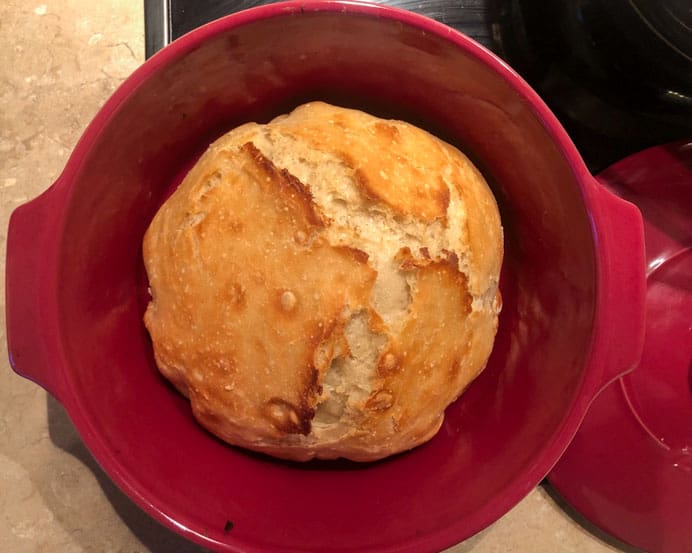
Credit: www.melaniemay.com
Troubleshooting Common Issues
Baking Dutch oven no knead bread is simple but can have some problems. Fixing common mistakes helps make better bread.
Here are solutions for dense bread, flat loaves, and crust problems. These tips improve your baking results.
Dense Bread
Dense bread happens when the dough does not rise enough. This makes the bread heavy and thick inside.
Too little yeast or not enough rising time causes dense bread. Also, using cold water slows yeast activity.
- Use the right amount of yeast in the recipe.
- Let the dough rise in a warm place for 12-18 hours.
- Use lukewarm water, not cold, to mix the dough.
- Avoid adding too much flour; it can make bread heavy.
Flat Loaf
A flat loaf means the bread spread out too much and did not rise upwards. It looks wide and low.
Flat bread often happens if the dough is too wet or overproofed. It loses strength and cannot hold shape.
- Check dough hydration and avoid adding too much water.
- Do not let the dough rise for too long before baking.
- Shape the dough gently but firmly before the second rise.
- Use a Dutch oven to keep shape during baking.
Crust Problems
Crust problems include bread that is too soft, too hard, or uneven. The crust affects taste and texture.
Too soft crust can happen if the bread cools in a humid place. Too hard crust can come from too high heat.
- Bake with the Dutch oven lid on for most time, then remove it for a few minutes to brown.
- Let bread cool on a wire rack to avoid moisture build-up.
- Avoid opening the oven too early, which can lower the heat.
- Use the right oven temperature, usually 450°F (230°C).
Serving Suggestions
Dutch oven no knead bread is a tasty and simple bread to enjoy. It has a crispy crust and soft inside.
You can serve it in many ways. Here are some ideas to make your bread time even better.
Best Spreads And Toppings
This bread goes well with many spreads and toppings. They add flavor and texture to your slices.
- Butter or garlic butter for a rich taste
- Jam or honey for a sweet touch
- Cheese slices like cheddar or brie
- Avocado with salt and pepper
- Hummus or pesto for a savory option
Meal Pairings
This bread pairs well with many meals. It can be a side or part of your main dish.
- Soups like tomato, chicken noodle, or vegetable
- Salads such as Caesar or garden salad
- Stews or chili for a hearty meal
- Cheese and charcuterie boards
- Egg dishes like omelets or scrambled eggs
Storage Tips
To keep your bread fresh, store it properly. This helps keep the crust crisp and inside soft.
- Wrap bread in a clean kitchen towel
- Keep it in a bread box or paper bag
- Store at room temperature for up to 3 days
- For longer storage, freeze slices in a sealed bag
- Reheat frozen bread in the oven for best texture

Credit: www.talesfromthekitchenshed.com
Frequently Asked Questions
What Is No Knead Bread?
No knead bread is a simple bread recipe requiring minimal effort. It uses a long fermentation process for gluten development instead of kneading. This method results in a crusty, artisan-style loaf. It’s perfect for beginners and only requires basic ingredients like flour, water, yeast, and salt.
How To Bake Bread In A Dutch Oven?
To bake bread in a Dutch oven, preheat it at 450°F (232°C) for 30 minutes. Place the dough inside on parchment paper. Cover and bake for 30 minutes, then uncover and bake for an additional 15 minutes. This technique creates a crispy crust and perfectly baked loaf.
Why Use A Dutch Oven For Bread?
A Dutch oven traps steam during baking, creating a moist environment. This results in a crispy crust and tender crumb. It evenly distributes heat, ensuring consistent baking. Using a Dutch oven mimics a professional bakery oven, making it ideal for homemade artisan bread.
Can I Use Whole Wheat Flour?
Yes, you can use whole wheat flour in no knead bread recipes. It adds a nutty flavor and nutritional benefits. However, it may require more water due to higher absorption. Start by substituting half of the all-purpose flour with whole wheat and adjust the hydration as needed.
Conclusion
This Dutch oven no knead bread recipe is simple and fun. It needs just a few ingredients and little effort. You get fresh, warm bread with a crispy crust. Perfect for any meal or snack time. Anyone can try this recipe at home.
Enjoy the smell and taste of homemade bread today. Baking bread has never been this easy. Give it a try and share with family and friends. Happy baking!